Travelers across the world are noticing something unsettling in 2026.
Flight prices suddenly feel unpredictable again.
Routes that looked affordable only weeks ago now seem dramatically more expensive. International airfare changes overnight. Long-haul flights fluctuate constantly. And many travelers searching for peaceful vacations or family reunions are left wondering the same thing:
“Why are airline fares rising so quickly again?”
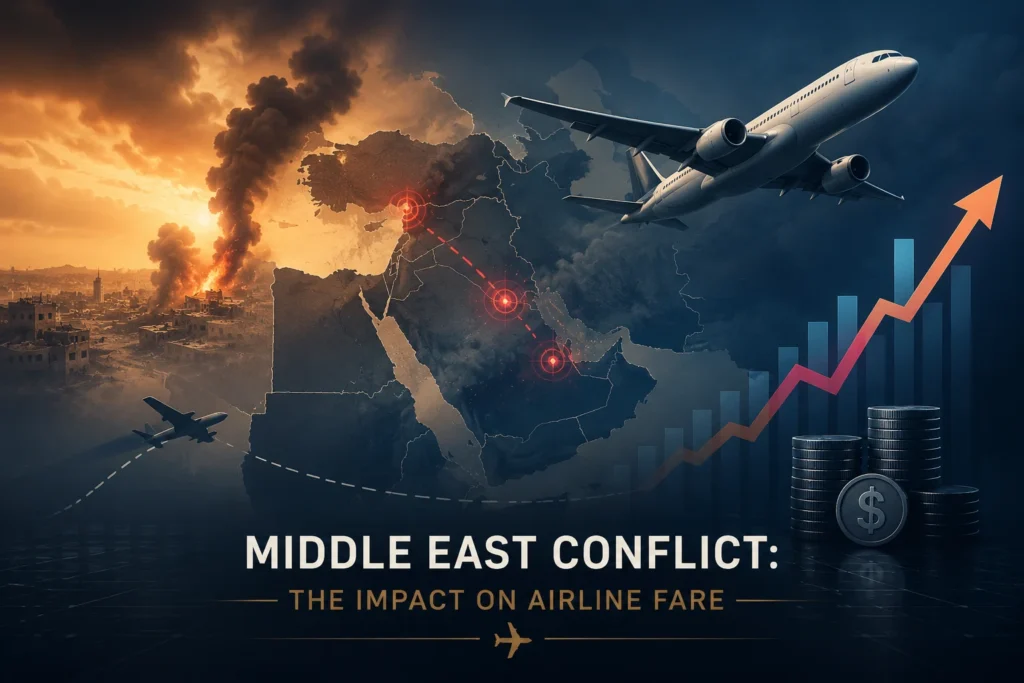
A major reason is the growing instability connected to the Middle East conflict and the pressure it is creating across global aviation networks.
Even travelers flying nowhere near the Middle East are beginning to feel the effects.
Because modern airline systems are deeply connected.
When conflict affects one major region of the world, the ripple effect spreads quickly through:
- Fuel pricing
- Airline routing
- Flight duration
- Insurance costs
- Airspace restrictions
- Aircraft scheduling
- International tourism demand
And suddenly, travelers trying to compare flight tix or planning vacations months in advance feel uncertain about when prices might rise again.
For many people, travel already feels expensive enough.
Hotels cost more.
Airfare feels unstable.
International trips require bigger budgets.
Even simple family vacations now demand careful financial planning.
That’s why understanding how global conflicts affect airline pricing matters more than ever in 2026.
This guide will explain:
- Why the Middle East conflict impacts airfare globally
- Which routes are affected most
- Why airlines are adjusting prices so aggressively
- How fuel prices shape ticket costs
- What travelers should expect moving forward
- Smart ways to reduce travel costs during unstable periods
Whether you’re planning domestic travel or trying to book international flights online, understanding the bigger picture behind rising airfare can help you make calmer and smarter travel decisions.
👉 Compare smarter travel options before prices rise further ✈️
👉 Need help finding better international routes? 📞 +1 (844) 551-9200
Why Global Conflicts Affect Airline Pricing So Quickly
Many travelers assume airfare is based mainly on distance.
But modern airline pricing is influenced by far more than that.
Airlines operate through a global system where fuel markets, international airspace, political stability, aircraft routing, and insurance costs are all deeply connected.
When tensions rise in important global regions like the Middle East, airlines often face immediate operational challenges.
Flights may need to:
- Avoid certain airspaces
- Take longer alternate routes
- Burn more fuel
- Adjust aircraft schedules
- Increase operational safety costs
Even small routing changes can create enormous financial impact for airlines operating hundreds or thousands of flights daily.
And eventually, those higher operational costs begin affecting passenger airfare.
Why Fuel Prices Matter So Much
One of the biggest reasons airline fares rise during geopolitical conflict is fuel.
Jet fuel remains one of the largest operating expenses for airlines worldwide.
The Middle East plays a major role in global energy markets, so any instability in the region often creates uncertainty around oil pricing. When oil prices become volatile, airlines immediately begin preparing for higher operating costs.
That pressure eventually reaches travelers through:
- Higher international airfare
- Reduced route discounts
- Fewer promotional fares
- Increased last-minute pricing
For travelers monitoring plane ticket price trends in 2026, this is one of the biggest reasons airfare feels so unstable.
And honestly, fuel costs affect far more routes than most travelers realize.
Even domestic flights can become more expensive because airline operating systems are interconnected globally.
The Biggest Mistake Travelers Still Make
One of the biggest mistakes travelers continue making during unstable travel periods is panic-booking emotionally instead of planning strategically.
The moment travelers hear headlines about conflict, rising oil prices, airline disruptions, or global instability, fear immediately takes over. People begin checking airfare repeatedly, watching prices fluctuate hour by hour, and convincing themselves that if they wait any longer, flights may suddenly become unaffordable.
That emotional pressure creates urgency.
And urgency often leads to rushed financial decisions.
Many travelers immediately assume that airfare will only continue rising from there. Sometimes that concern turns out to be correct, especially during peak demand periods or major operational disruptions. But modern airline pricing systems are far more dynamic and unpredictable than most people realize.
Airlines today constantly adjust pricing based on real-time demand, competitor activity, booking pace, fuel projections, seasonal travel behavior, and remaining seat inventory. This means prices can move downward just as easily as upward depending on how airlines respond to changing market conditions.
Yet many travelers still react emotionally instead of strategically.
They rush into bookings without comparing alternate airports, nearby departure cities, flexible travel windows, or different international connection routes. Others focus entirely on airfare while ignoring the total cost of the trip itself, including baggage fees, airport transfers, hotel flexibility, cancellation policies, and additional travel expenses that can quietly increase the overall budget.
That emotional decision-making often causes travelers to overpay far more than necessary.
The smartest travelers in 2026 approach uncertain travel markets very differently.
Instead of reacting emotionally to every news headline, they study pricing trends patiently. They understand that even during unstable global situations, airlines still compete aggressively on many routes. They compare travel windows carefully, remain flexible with departure dates when possible, and monitor pricing behavior over time instead of rushing into the first available option.
Most importantly, experienced travelers understand something many people overlook:
Expensive airfare does not automatically mean affordable travel has disappeared.
In many cases, it simply means flexibility, timing, route strategy, and patience matter more than ever before.
And honestly, travelers who remain calm and strategic during uncertain periods often find far better opportunities than those who let fear control the booking process.
✅Read also : Bali or Thailand? Where to Book Cheap Flights for a Peaceful Couples Trip (2026)
Which Routes Are Being Affected Most?
Long-haul international routes are feeling the strongest pressure.
Flights connecting:
- North America
- Europe
- Asia
- Middle Eastern transit hubs
are particularly sensitive because many of these routes rely on efficient global airspace connections.
When airlines must reroute around restricted or high-risk regions, flights often become:
- Longer
- More expensive
- Less fuel efficient
This creates noticeable pricing pressure on premium international routes.
Travelers completing air ticket reservation for Europe or Asia are especially noticing fare fluctuations compared to previous years.
Airlines Are Adjusting More Than Just Ticket Prices
Many airlines are also changing:
- Route frequency
- Aircraft scheduling
- Seasonal operations
- International partnerships
Some carriers reduce flights temporarily on uncertain routes, while others shift aircraft toward stronger demand markets.
Travelers managing United Airlines booking for long-haul international routes may notice changing connection patterns or fluctuating pricing depending on route demand and fuel conditions.
Others comparing United Airlines ticket booking options across different departure cities may find dramatically different pricing simply because airline competition varies by region.
Travelers planning Asia routes sometimes book Air Canada flights through alternate connections to reduce pricing pressure during high-demand travel periods.
Meanwhile, travelers contacting Alaska Airlines customer service may notice changing regional schedules connected to broader airline network adjustments.
Long-haul travelers occasionally reach out to Cathay Pacific customer care regarding international routing flexibility and Asia connection updates during periods of operational uncertainty.
Hotels Are Feeling the Impact Too
Airfare is not the only thing changing.
Hotels in major international destinations are also reacting to shifting travel patterns.
When flight routes become unstable or expensive:
- Some destinations experience reduced tourism demand
- Others see sudden increases in bookings from rerouted travelers
- Luxury hotels adjust pricing dynamically
- Resort markets fluctuate seasonally
Travelers visiting destinations like Dubai, Europe, Thailand, Bali, or Japan may notice hotel pricing changing alongside airfare patterns because global tourism demand remains deeply connected.
That’s why travelers should always evaluate total trip cost, not airfare alone.
👉 Want to find budget-friendly hotels for your trip?
👉 Explore smarter travel planning, hotel deals, and complete trip support with Travoaid.
Smart Ways Travelers Can Still Save Money
Even during unstable global conditions, travelers can still reduce costs strategically.
Flexibility remains one of the strongest advantages travelers have.
Travelers willing to:
- Shift dates slightly
- Use alternate airports
- Avoid peak weekends
- Monitor fares patiently
- Compare connection routes
often continue finding better opportunities than travelers who rush emotionally into bookings.
Booking windows also matter more now.
Many travelers still assume earlier is always better, but airlines constantly adjust pricing based on demand and competition.
Sometimes patience creates better value.
Real Example
A traveler flying from New York to Bangkok may see:
- Direct premium route: $1,850
- Alternate routing with flexible dates: $1,240
Same destination.
Very different pricing structure.
That difference often comes from routing efficiency, fuel costs, airline competition, and traveler flexibility.
Final Insight
The Middle East conflict is affecting airline fares because global aviation depends heavily on stability, fuel markets, and efficient international routing systems.
When instability grows in major regions, airfare pressure spreads quickly across international travel networks.
But the smartest travelers in 2026 are not reacting emotionally to every price increase.
They are:
- Understanding how airline pricing works
- Monitoring trends patiently
- Staying flexible with travel plans
- Comparing total trip value carefully
- Making calmer booking decisions
Because even during uncertain global periods, smart planning still creates opportunities for better travel experiences.
✅Read also : How to Travel Internationally with Only Carry-On (Save on Baggage Fees)
FAQs
1. Why does the Middle East conflict affect airline fares globally?
The Middle East plays a major role in global aviation routes and fuel markets. When tensions rise in the region, airlines often face higher fuel costs, rerouted flights, longer travel times, and increased operational expenses. Those additional costs eventually affect airfare pricing worldwide, even for travelers flying far from the conflict itself.
2. Are international flights more affected than domestic routes?
Yes, generally international routes feel stronger pricing pressure because long-haul travel depends more heavily on fuel consumption, international airspace access, and global route efficiency. Flights connecting Europe, Asia, and North America are especially sensitive to international operational disruptions.
3. Will airline fares continue rising in 2026?
Possibly on certain routes, especially during high-demand seasons or ongoing geopolitical uncertainty. However, airfare does not rise uniformly across every market. Airline competition, seasonal demand, and traveler flexibility still create opportunities for lower fares in many situations.
4. Is it still safe to book international travel?
For most travelers, yes.
Airlines continuously monitor global safety conditions and adjust routes when necessary. Flights generally continue operating safely even when airlines must reroute around higher-risk regions.
Travelers should stay informed, purchase flexible bookings when possible, and monitor airline travel updates before departure.
5. Why do flight prices change so quickly now?
Modern airlines use dynamic pricing systems powered by real-time demand data. Prices constantly adjust based on:
- Search activity
- Remaining seats
- Fuel expectations
- Competitor pricing
- Seasonal demand
- Route performance
That’s why airfare can sometimes change dramatically within hours or days.
6. What is the smartest way to save money during unstable travel periods?
The smartest travelers stay flexible and patient.
Instead of panic-booking emotionally, they compare alternate airports, flexible dates, nearby routes, and total trip costs carefully. Small adjustments often create significant savings even during expensive travel periods.
👉 Compare smarter international travel options today ✈️ CLICK HERE
👉 Need help finding better global routes? 📞 +1 (844) 551-9200