
You search for a flight today and see one price.
A week later, you search again and suddenly the same route feels dramatically different.
Nothing changed.
The airline is the same.
The destination is the same.
The airport is the same.
Even the travel distance remains exactly the same.
Yet somehow the price moves dramatically.
And honestly, this is one of the most confusing parts of modern travel.
Many travelers assume airfare depends mostly on distance or fuel costs. It feels logical to believe a longer route should naturally cost more and a shorter route should cost less.
But airline pricing rarely works that way anymore.
In 2026, airlines rely heavily on demand forecasting systems, traveler behavior patterns, route competition, and seasonal movement rather than simple distance calculations alone. That’s why two travelers purchasing flight and tickets for the exact same destination can end up paying completely different prices depending on when they decide to travel.
And honestly, timing quietly influences airfare far more than most travelers realize.
Some months naturally create stronger travel demand because of holidays, school schedules, weather patterns, and vacation habits. Other months experience softer demand, which creates far more aggressive pricing competition between airlines trying to fill empty seats.
That difference is exactly where some of the biggest travel savings quietly happen.
And honestly, travelers who understand these seasonal patterns often save far more money than people endlessly chasing random discounts online.
This guide explains why certain months consistently create lower airfare opportunities, how airline demand actually behaves, what mistakes travelers still make, and how understanding timing can completely change your travel budget.
👉 Compare smarter airfare before prices rise ✈️
👉 Need help finding better travel routes? 📞 +1 (844) 551-9200
Why Airline Pricing Changes So Much Throughout the Year
Airline pricing follows demand.
Not distance.
Not logic.
And sometimes not even what travelers expect.
Airlines continuously monitor how many people search flights, how quickly seats sell, what competitors are charging, seasonal travel trends, and how many seats remain available.
When demand rises, prices usually rise with it.
When demand softens, airlines begin competing more aggressively.
That competition often creates surprising airfare opportunities.
Travelers planning vacations during major holidays naturally increase demand. Families travel during school breaks. Business travel peaks during specific periods. Summer vacations create heavy movement. Events and conferences create sudden booking spikes.
But during slower travel periods, airlines face a different challenge:
Empty seats.
And empty seats generate no revenue.
That’s exactly why some months consistently become much cheaper.
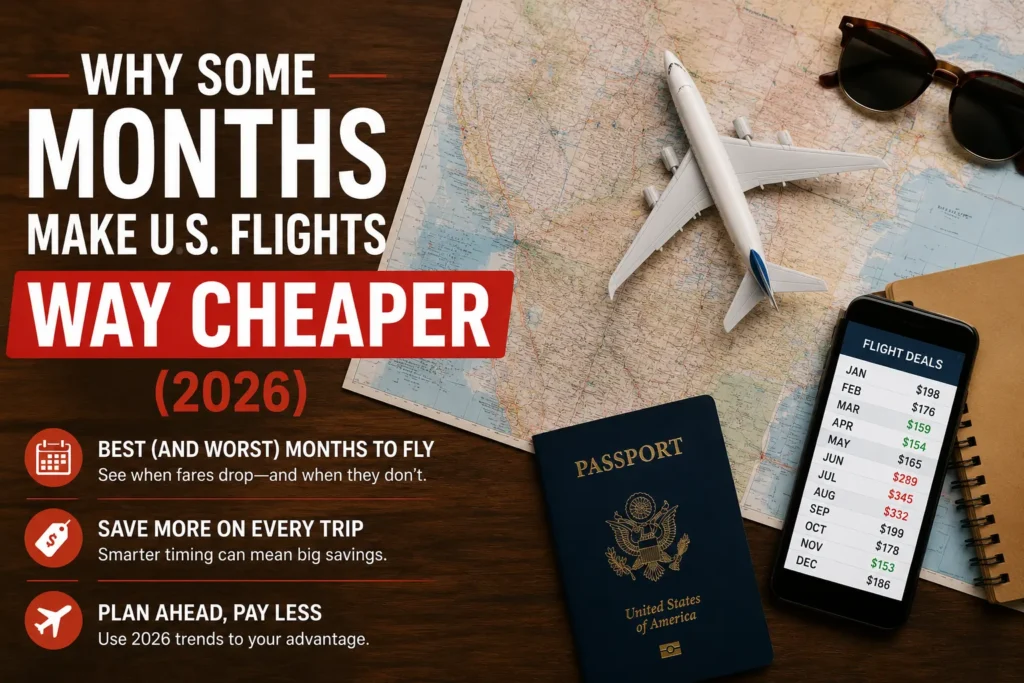
Why January, February, and September Often Feel Different
Historically, several periods during the year tend to create softer travel demand across many U.S. routes.
January often becomes quieter after holiday travel ends.
February outside major holiday weekends sometimes experiences weaker leisure demand.
September often creates lower travel activity immediately after summer vacation periods end.
During these periods, airlines frequently lower fares because travel demand temporarily slows.
That creates opportunities for travelers who remain flexible.
And honestly, these quieter travel windows often create better overall experiences too.
Airports become calmer.
Tourist crowds soften.
Hotels occasionally lower prices.
Destinations feel less overwhelming.
Sometimes the entire trip improves, not just the airfare.
✅ Read also : California Flights, Without the High Airfare (2026)
The Biggest Mistake Travelers Still Make
One of the biggest mistakes travelers continue making in 2026 is assuming that cheaper airfare appears randomly instead of understanding how seasonal travel behavior actually works. Many travelers still approach vacation planning emotionally. The moment they decide they want a trip, they immediately begin searching for flights without paying attention to the larger travel patterns happening around them. If airfare looks expensive during that moment, they often assume prices are simply high everywhere.
But airline pricing rarely behaves randomly.
Behind the scenes, airlines constantly react to traveler behavior. Demand rises and falls throughout the year depending on holidays, school schedules, vacation seasons, long weekends, weather patterns, and major travel events. Yet many travelers unknowingly choose the most expensive periods year after year because they automatically plan trips during holiday windows or peak vacation months without realizing how heavily those periods influence pricing.
Others become so focused on chasing discounts or promotional offers that they overlook one of the biggest factors affecting airfare: timing itself. And honestly, that misunderstanding quietly costs travelers much more money than they realize.
The smartest travelers in 2026 approach airfare very differently. Instead of asking only, “When should I book?” They also ask, “When should I travel?” That small shift in thinking completely changes the way travel planning works.
Experienced travelers understand that timing affects much more than ticket prices alone. The month or week you choose to travel can influence airport congestion, destination crowd levels, hotel costs, seasonal weather conditions, local experiences, and even how enjoyable the trip feels after arrival.
Sometimes moving a trip by only a few weeks creates dramatically better value than spending hours searching for lower fares online. A destination that feels expensive, crowded, and stressful during one month may suddenly become calmer, cheaper, and more enjoyable during another.
And honestly, travelers who understand timing usually end up doing something even better than saving money.
They often enjoy a better overall travel experience too.
Why Midweek Travel Usually Creates Better Opportunities
Travel demand does not only change by month.
It changes by day as well.
Most travelers naturally prefer:
Friday departures
Weekend travel
Sunday returns
Airlines understand these patterns extremely well.
That’s why midweek flights often create stronger pricing opportunities.
Flights departing Tuesday, Wednesday, and Thursday frequently experience softer demand compared to heavier weekend travel periods.
And honestly, those quieter travel days often improve the overall experience too.
Airports feel less crowded.
Security lines move faster.
Flights sometimes operate more smoothly.
The journey itself often feels calmer.
Airlines and Travel Patterns in 2026
Travel behavior in 2026 continues changing rapidly, and airlines are adjusting pricing strategies much more aggressively than many travelers realize. Seasonal demand, route popularity, business travel activity, and competition between carriers all influence how airfare moves throughout the year.
Travelers comparing international routes often explore Air Canada airline tickets because larger global route networks can sometimes create more flexibility and alternative connection opportunities. Wider international coverage occasionally opens pricing combinations that travelers may not immediately notice during a standard search.
On the West Coast, travelers reviewing regional travel plans sometimes check the Alaska Airlines booking phone number while adjusting schedules or exploring alternate routing options during changing travel periods. Regional demand patterns often behave differently from major nationwide travel trends, which can create unexpected pricing shifts.
Travelers planning long-haul Asia journeys also frequently compare Cathay Pacific booking options because international seasonal demand affects global routes differently depending on destination popularity, travel periods, and worldwide passenger movement.
Domestic travelers managing schedule changes occasionally reach out to Delta Airlines customer care while balancing timing flexibility and travel adjustments. Schedule convenience and route timing have become increasingly important as travelers focus more on overall journey quality rather than simply ticket cost.
Meanwhile, budget-conscious travelers often compare Frontier Airlines flight booking opportunities because lower base fares can sometimes create surprisingly strong value during softer demand periods, especially when travel plans remain flexible.
And honestly, travelers who compare multiple airlines strategically often discover much stronger opportunities than those who repeatedly search only one carrier. Modern airfare is no longer simply about finding a lower price. It is increasingly about understanding how airline behavior changes throughout the year and using that knowledge to travel smarter.
Why Flexibility Creates Bigger Savings Than Discounts
Many travelers spend enormous amounts of time searching for coupons, promotions, and flash sales.
But honestly, flexibility often creates far stronger results.
Moving departure dates slightly, changing airports, or traveling during softer months frequently reduces airfare more dramatically than most advertised promotions.
The biggest savings often come from timing rather than luck.
Real Travel Example
A traveler flying from Chicago to Orlando during July may see airfare around $520.
The same traveler flying in late September may discover a fare closer to $310.
The route remains identical.
The distance remains identical.
The difference is demand.
And honestly, understanding that pattern completely changes how smart travelers plan trips.
Final Thoughts
Airfare in 2026 feels unpredictable because airline systems constantly respond to changing traveler behavior.
But underneath that complexity, one pattern remains remarkably consistent:
Demand drives pricing.
The smartest travelers understand that some months naturally create stronger opportunities because airlines compete harder for passengers during slower periods.
Because modern travel is no longer only about finding cheap flights.
It’s about understanding when opportunity quietly appears.
And honestly, travelers who understand timing usually save money without feeling like they’re constantly chasing deals.
✅ Read also : Booked Southwest Airlines—Here’s What Surprised Me Most (2026)
FAQs
1. Why are some months cheaper for U.S. flights?
Certain months naturally experience lower travel demand because holidays, school schedules, and major vacation periods end. When fewer people travel, airlines often lower prices to attract passengers and fill available seats.
That softer demand creates stronger opportunities for travelers who can remain flexible with timing.
2. Which months are usually cheapest for domestic U.S. flights?
While routes vary, January, parts of February, and September often create lower pricing opportunities because overall travel demand usually decreases after larger holiday or vacation periods end.
However, pricing still depends heavily on destination, route competition, and seasonal events.
3. Does booking early automatically guarantee cheaper airfare?
Not always.
Modern pricing systems constantly change based on booking pace, route demand, and airline competition. Booking extremely early sometimes locks travelers into higher pricing before airlines adjust fares more aggressively later.
Monitoring pricing trends often works better than automatically booking as early as possible.
4. Why do midweek flights often cost less?
Midweek travel usually experiences weaker demand because most travelers naturally prefer weekend departures and returns.
Lower demand often pushes airlines to create stronger pricing opportunities on Tuesday, Wednesday, and Thursday routes.
5. Is flexibility really more important than discounts?
For many travelers, yes.
Flexibility with travel dates, airports, and timing frequently creates larger savings opportunities than advertised promotions alone because demand patterns influence airfare heavily.
6. What is the biggest mistake travelers make with airfare timing?
The biggest mistake is focusing only on booking dates instead of travel dates.
Experienced travelers understand that when you travel often affects pricing far more than many people expect.
And honestly, understanding seasonal demand patterns frequently creates stronger savings than endlessly searching for random deals.
👉 Compare smarter travel opportunities today ✈️ CLICK HERE
👉 Need help finding better routes? 📞 +1 (844) 551-9200