
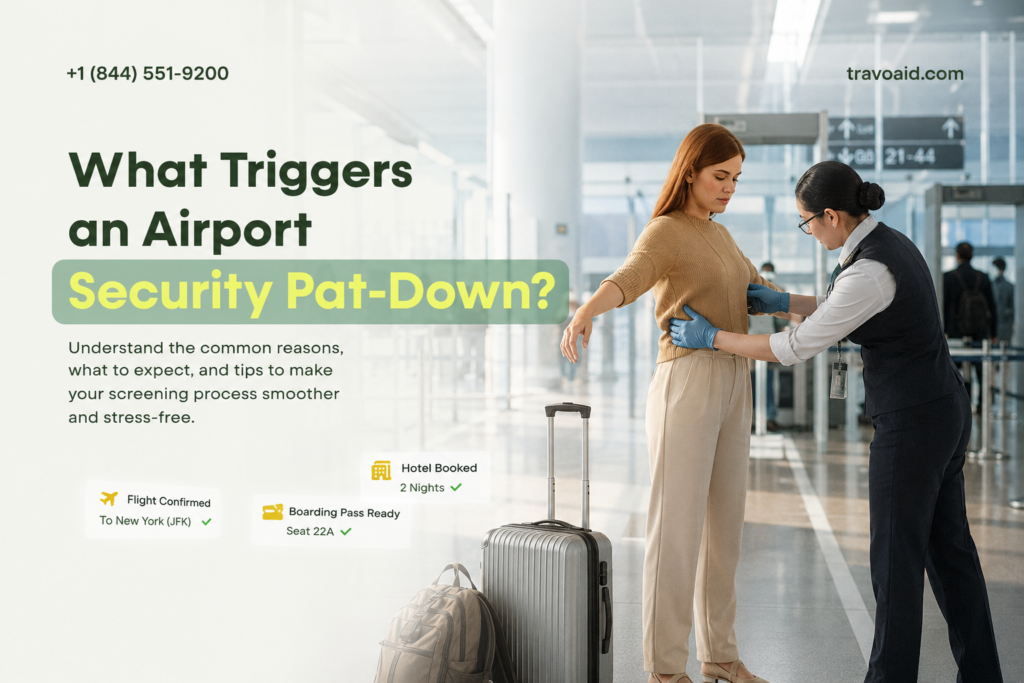
Airport Security Pat-Downs Are More Common Than Many Travelers Think
For many travelers, walking through airport security is one of the most stressful parts of flying.
Even experienced flyers occasionally wonder why some passengers receive additional screening while others move through security in just a few minutes. One of the most common questions travelers ask is whether a security pat-down means they have done something wrong.
The answer is almost always no.
Airport security officers perform pat-downs for many different reasons, and most of them are completely routine. A pat-down is simply an additional screening procedure designed to help maintain passenger safety. It is not a punishment, an accusation, or an indication that someone is suspected of committing an offense.
Understanding why pat-downs happen can remove much of the anxiety many travelers experience before reaching the security checkpoint.
Whether you are taking your first flight or you travel several times each year, knowing what to expect helps make the airport experience much smoother.
Many travelers compare flight and tickets options while planning vacations, while others complete international flight booking months before departure. Regardless of where you are flying, understanding airport security procedures is just as important as choosing the right flight.
This guide explains what commonly triggers an airport security pat-down, how the screening process works, what travelers should expect, and practical ways to reduce unnecessary delays during airport screening.
✅ Read also : 24-Hour Flight Cancellation Rule: What Every Traveler Should Know
What Is an Airport Security Pat-Down?
A security pat-down is a physical screening procedure performed by trained airport security personnel when additional inspection is necessary after standard screening.
In most situations, travelers first pass through body scanners or metal detectors. If security equipment detects something that requires additional verification, officers may perform a brief pat-down to identify the source.
The procedure follows established security protocols and is designed to protect both passengers and airport operations.
For most travelers, the process lasts only a few minutes.
Common Reasons Travelers Receive a Pat-Down
Most pat-downs happen because of ordinary situations rather than suspicious behavior.
Common reasons include:
| Situation | Why Additional Screening May Occur |
| Metal accessories | Belts, jewelry, watches, or clothing hardware may trigger alarms. |
| Medical devices | Artificial joints, prosthetics, insulin pumps, or medical equipment sometimes require additional screening. |
| Thick clothing | Heavy jackets, layered clothing, or bulky garments can prevent scanners from obtaining clear images. |
| Random selection | Some travelers are selected through routine security procedures even when nothing unusual is detected. |
| Scanner alerts | Advanced imaging equipment may identify an area requiring manual verification. |
| Carrying permitted medical items | Certain approved medical supplies may require additional inspection. |
Receiving a pat-down under any of these circumstances is considered a normal part of airport security.
What Happens During the Pat-Down Process?
Airport security officers normally explain why additional screening is required before beginning the procedure.
Travelers may also request a private screening area if preferred.
Throughout the process, trained officers follow established procedures while maintaining professionalism and respecting passenger privacy.
Most screenings are completed quickly, allowing travelers to continue toward their departure gate without significant delays.
What Usually Does NOT Trigger a Pat-Down?
Many common travel myths create unnecessary concern.
Simply purchasing a one-way ticket, traveling internationally, carrying legal electronics, or wearing everyday clothing does not automatically result in a pat-down.
Similarly, airline choice, nationality, destination, or ticket price alone do not determine whether additional screening occurs.
Airport security decisions are based on security procedures rather than personal characteristics.
Simple Ways to Make Airport Screening Easier
Although additional screening cannot always be avoided, travelers can often make the process smoother by preparing before reaching security.
Wearing easily removable outerwear, emptying pockets completely, organizing electronics and liquids properly, following security instructions carefully, and arriving at the airport with sufficient time all contribute to a more efficient screening experience.
Remaining calm and cooperative also helps the process move more quickly.
👉 Compare smarter travel options before prices increase ✈️
👉 Need help finding better international routes? 📞 +1 (844) 551-9200
Don’t Let This Simple Airport Security Misunderstanding Ruin Your Travel Day
- Many travelers mistakenly believe that being selected for a security pat-down means they have done something wrong, when in reality it is often just a routine safety procedure.
- Becoming anxious, frustrated, or argumentative during the screening process can make the experience feel longer and more stressful for both travelers and security officers.
- Airport body scanners occasionally detect items or clothing that require additional verification, and a brief pat-down is simply used to confirm there are no prohibited objects.
- Some passengers worry they are being personally singled out, but many additional screenings occur through automated scanner alerts or random security selection rather than individual suspicion.
- The most confident travelers understand that airport security procedures are designed to protect everyone. They remain calm, cooperate with officers, and view a pat-down as a normal part of modern air travel instead of a cause for concern.
- A little preparation and the right mindset can turn an unexpected pat-down into a quick, routine experience, allowing travelers to continue their journey with confidence and peace of mind.
Airlines Smart Travelers Check Before Heading to the Airport
- Travelers planning both domestic and international trips usually compare several airlines before booking because ticket prices, schedules, baggage allowances, onboard services, and route networks can vary throughout the year. Many travelers consider United Airlines for its extensive route network connecting major U.S. cities with destinations across the globe.
- Budget-conscious travelers often keep an eye on cheap United flights, especially when adjusting travel dates or departure airports. Seasonal promotions and competitive pricing can sometimes create better opportunities for those willing to remain flexible.
- Regional passengers also look into SkyWest Airlines booking options, particularly when connecting from smaller airports to larger international gateways. These regional flights can provide convenient access to long-haul departures while offering additional scheduling flexibility.
- Experienced travelers rarely choose an airline based only on the advertised fare. Instead, they compare baggage policies, connection times, airport convenience, onboard comfort, reliability, loyalty benefits, and overall travel value to select the option that best fits their journey.
How Travoaid Helps Travelers Before They Fly
Planning ahead often reduces airport stress, and Travoaid helps travelers make informed travel decisions before departure.
What Travoaid Provides
- Flight comparison assistance for domestic and international routes.
- Flexible travel options based on budget and schedule.
- Guidance for booking multi-city and international itineraries.
- Help finding competitive airfare throughout the year.
- Travel planning support before departure.
- Friendly customer assistance for flight-related questions.
Good preparation often creates a smoother airport experience long before travelers arrive at the security checkpoint.
Helpful Airport Security Tips
| Travel Tip | Why It Helps |
| Arrive early | Reduces stress if additional screening is required. |
| Empty pockets before screening | Prevents unnecessary scanner alerts. |
| Wear simple clothing | Makes security screening faster and easier. |
| Keep travel documents ready | Speeds up the overall checkpoint process. |
| Listen carefully to officers | Helps screening move smoothly for everyone. |
| Stay calm | Most additional screenings are routine and completed quickly. |
✅ Read also : Is a Travel Agent Worth It for Flight Bookings?
Final Thoughts
Airport security pat-downs are a routine part of modern air travel.
While they may feel unexpected, they are designed to improve passenger safety rather than create inconvenience.
Understanding why pat-downs occur, preparing properly before reaching security, and remaining calm throughout the process can make airport screening far less stressful.
The best travel experiences often begin with good preparation.
And knowing what to expect before arriving at the airport is one of the simplest ways to travel with greater confidence.
FAQs
1. Does receiving an airport security pat-down mean I did something wrong?
No. In almost every situation, a pat-down is simply part of standard airport security procedures. Additional screening may occur because of scanner alerts, medical devices, clothing, metal objects, or random security selection. Most travelers who receive a pat-down have done nothing wrong and are simply completing an extra security step before continuing their journey.
2. Can I request a private pat-down?
Yes. Travelers generally have the right to request that a pat-down be conducted in a private screening area if they feel more comfortable. Airport security officers can explain the procedure beforehand, and travelers may also request that a companion accompany them where permitted by airport procedures.
3. Will medical devices trigger additional screening?
Sometimes. Artificial joints, prosthetic limbs, insulin pumps, pacemakers, and other approved medical devices can occasionally require additional screening because they may appear differently on airport scanners. Travelers should inform security officers about medical equipment before the screening process begins to help ensure a smoother experience.
4. Can clothing affect airport security screening?
Yes. Bulky jackets, multiple clothing layers, metal accessories, boots, belts, and certain garments can sometimes make it more difficult for screening equipment to obtain a clear image. Wearing simple, comfortable clothing and removing unnecessary accessories before entering the checkpoint may help reduce additional screening.
5. Does airline choice affect whether I receive a pat-down?
No. Whether you complete fly air ticket booking, purchase an air ticket, or travel with any particular airline, security screening procedures remain separate from airline operations. Airport security decisions are based on screening protocols rather than the airline you choose to fly.
6. What is the best way to make airport security easier?
The simplest approach is arriving early, following security instructions carefully, organizing your belongings before reaching the checkpoint, removing items from your pockets, and remaining calm throughout the screening process. Travelers who prepare in advance usually experience a faster and less stressful airport security experience.
👉 Fly with confidence by understanding airport security before your next trip. CLICK HERE
👉 Need help planning your next journey? Contact Travoaid at +1 (844) 551-9200.