
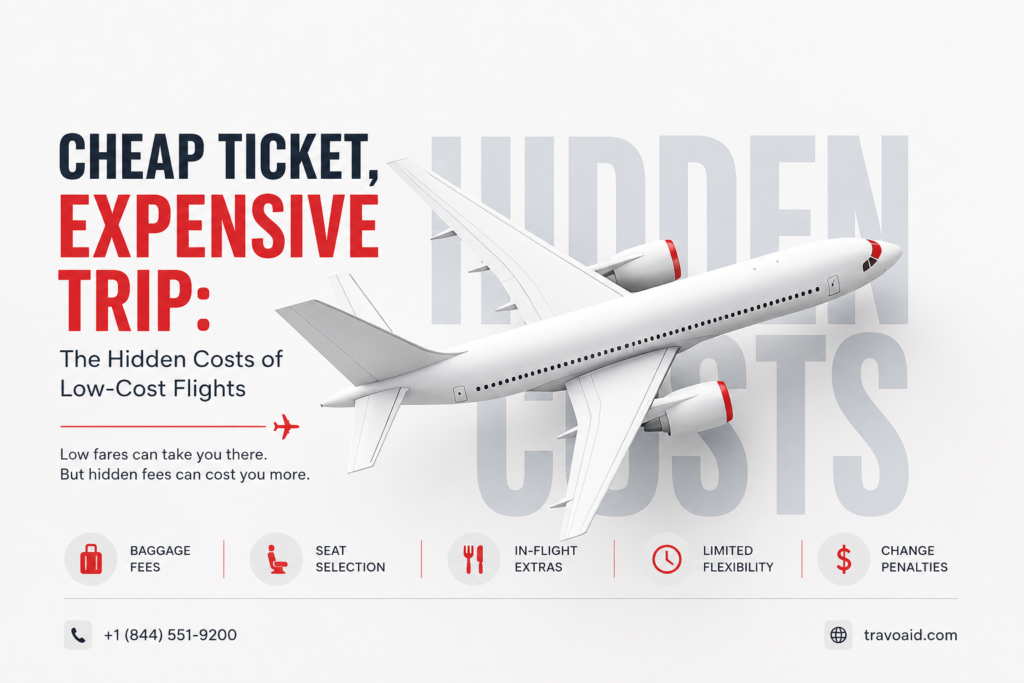
The Cheap Fare That Can Quietly Become Your Most Expensive Travel Decision
A low airfare can feel like the perfect travel win.
You search for a destination, compare a few dates, and suddenly see a price that seems almost too good to ignore. It may be a weekend escape, a family visit, a business trip, or the beginning of an international adventure. The number on the screen looks exciting, the deal feels urgent, and booking quickly seems like the smartest move.
But there is a question many travelers forget to ask before clicking purchase.
What will this trip really cost by the time it is over?
A low flight ticket price can sometimes be only the first part of the expense. Baggage charges, seat selection fees, airport transportation, meal costs, booking changes, hotel location, long layovers, and strict ticket rules can quietly increase the total amount far beyond what travelers expected.
This does not mean low-cost flights are always a bad choice. Many travelers save real money by choosing them carefully. The key is understanding the complete price before booking, not simply the first number displayed during a search.
For travelers comparing an air ticket for a short domestic trip or planning a long international journey, the smartest decision is rarely based on airfare alone. It is based on total value.
This guide explores why cheap tickets can become expensive trips, what hidden costs travelers should watch for, and how to make better booking decisions in 2026.
✅ Read also : Chicago Travelers Love These Top Domestic Flight Routes
The Curiosity Behind a Low Fare: Why Is This Ticket So Cheap?
When travelers see an unusually low price, the first reaction is often excitement.
The second reaction should be curiosity.
Airlines and booking platforms use different pricing structures. Some fares include more services upfront, while others offer a lower base price and charge separately for nearly every additional service. This means two tickets on similar routes may look very different at first, even if the final cost becomes surprisingly close after extra charges are added.
A low air ticket price may not include checked baggage, carry-on luggage, seat selection, meals, airport check-in, ticket flexibility, or priority boarding. Travelers who do not review these details carefully can end up paying far more than expected once the booking process is complete.
The best travel decisions begin with one simple habit: look beyond the headline fare.
The Baggage Fee Surprise That Changes the Entire Trip Budget
Baggage is one of the most common reasons a cheap flight becomes more expensive.
Many travelers book a low fare believing they have secured a great deal, only to discover later that checked luggage costs extra. In some cases, even a carry-on bag may come with an additional charge depending on the airline and fare type.
This can become especially important for families, long vacations, international travel, or trips involving special items such as sports equipment, baby gear, or business materials.
Before completing air ticket booking, travelers should always check what is included with the fare. A ticket that appears cheaper at first may become less attractive after baggage charges are added for every traveler.
For short trips with only a small personal item, a low-cost ticket may still provide excellent value. For longer trips, the total baggage cost can completely change the comparison.
Seat Selection Can Be More Than a Small Extra
Many travelers assume they will automatically receive a reasonable seat assignment.
That is not always the case.
Low-cost fares may assign seats randomly unless travelers pay extra to choose where they sit. For solo travelers, this may not be a major concern. For couples, families, elderly travelers, or people who prefer aisle or window seats, seat selection can become an important part of the experience.
The cost may seem small at first, but when multiplied across several passengers and multiple flight segments, it can add a noticeable amount to the total trip budget.
Travelers planning flight ticket booking should consider whether seat choice truly matters for their trip. If comfort and convenience are important, including seat selection in the total price comparison is essential.
The Airport Transfer Cost Many Travelers Forget
A cheap flight may arrive at an airport far from the city center.
This is one of the most overlooked travel expenses.
Some low-cost airlines use secondary airports because operating costs may be lower. While the airfare can look attractive, the transportation cost from the airport to the hotel or city center may be significantly higher than expected.
A traveler may save money on the ticket but spend extra on buses, trains, taxis, ride-sharing services, or rental cars after arrival. Long transfer times can also reduce valuable vacation hours and create more travel fatigue.
Before making an international flight booking, travelers should compare airport locations, transfer costs, travel times, and available transportation options. A slightly higher airfare into a more convenient airport may create better overall value.
👉 Need help finding better flight deals? 📞 +1 (844) 551-9200
The Cost of Long Layovers and Awkward Schedules
A low fare often comes with a trade-off.
That trade-off may be a long layover, an overnight connection, an early-morning departure, or an arrival time that makes hotel check-in difficult.
Long layovers can lead to extra food costs, airport lounge fees, hotel stays, transportation expenses, or simply lost time that could have been spent enjoying the destination.
For some travelers, a longer connection is worth the savings. For others, it can create unnecessary stress and reduce the quality of the trip.
When comparing international flight tickets, travelers should look at the entire itinerary rather than focusing only on the fare. A cheaper ticket with a twelve-hour layover may not be the best deal when time, comfort, and additional expenses are considered.
Change Fees and Strict Fare Rules Can Be Costly
Travel plans do not always go exactly as expected.
A family emergency, work schedule change, visa delay, illness, weather disruption, or personal situation can require travelers to modify their trip.
Low-cost tickets are often more restrictive. Some may not allow changes, while others may charge substantial fees for cancellations, date changes, or name corrections.
This does not mean flexible tickets are always necessary. However, travelers should understand the rules before booking. A low fare with no flexibility may be perfect for a certain trip, but it may be risky for travel plans that could change.
Travelers searching for the lowest flight fare should compare ticket conditions alongside price. The cheapest option is not always the most affordable option if one small change could cost hundreds of dollars later.
Why the Cheapest Fare Is Not Always the Best Fare
The goal of travel planning should not be to find the lowest number on the screen.
The goal should be to find the strongest value.
A slightly higher fare may include baggage, better flight times, a more convenient airport, seat selection, meals, flexible booking terms, and shorter travel time. In many cases, this can make the more expensive ticket the smarter choice.
Travelers who compare flight fares carefully often discover that the difference between a low-cost fare and a standard fare is smaller than it first appears.
A great deal is not simply cheap.
A great deal is useful, comfortable, practical, and aligned with the traveler’s needs.
The Airline Comparison Habit That Protects Your Travel Budget
Travelers comparing airfare in 2026 often review multiple airlines because fare structures, route networks, baggage policies, seat options, and schedules can vary significantly from one carrier to another. A ticket that appears cheaper at first may include fewer services, while a slightly higher fare may provide better baggage allowances, more convenient flight times, and greater flexibility if travel plans change. This is why experienced travelers look beyond the first price they see and compare the full journey before making a decision.
Many travelers explore united airlines when planning domestic or international travel because the carrier offers extensive route coverage and connections across major destinations. A larger route network can provide more choices for departure times, layovers, and airport options, which may help travelers build an itinerary that fits both their budget and schedule.
Some travelers compare united airlines flights with other carriers to evaluate travel times, connection quality, baggage rules, and overall ticket flexibility. Looking beyond the base fare can help travelers identify which itinerary offers the strongest balance between comfort, convenience, and value. A slightly higher ticket price may sometimes save money later by reducing extra fees or avoiding inconvenient travel arrangements.
Budget-conscious travelers may also monitor cheap united flights when looking for competitive pricing during different travel periods. A lower fare can offer excellent value when the included services match the traveler’s needs, especially for short trips or travelers who can pack light and remain flexible with travel dates.
Others compare united plane tickets with alternative airline options before booking because airfare can change depending on route demand, travel dates, airport competition, and seat availability. The most experienced travelers do not judge a flight only by the initial ticket price. They compare the complete journey, including baggage costs, airport transfers, layovers, comfort, and flexibility, before deciding which option truly provides the best value.
The Smart Traveler’s Value Check Before Booking
Before finalizing a booking, travelers should look at the total cost of the trip.
This includes baggage fees, seat charges, airport transportation, hotel location, meals during long layovers, travel insurance, change rules, and the value of their time.
Many travelers search for flight offers because promotions can create genuine savings. However, every offer should be reviewed carefully to understand what is included and what may cost extra later.
The smartest approach is simple.
Compare the total price.
Compare the total travel time.
Compare the total comfort.
Then choose the option that fits the trip best.
Better Flights, Better Trips, Better Travel Decisions
Choosing a flight carefully can improve much more than your travel budget.
It can reduce stress, protect your time, improve comfort, and help you arrive ready to enjoy the destination. A slightly higher fare may sometimes save money overall, while a very cheap fare may create expenses that were never obvious at the beginning.
Travelers who understand hidden costs do not need to avoid low-cost flights.
They simply know how to evaluate them properly.
The best travel deals are not always the ones with the lowest advertised price.
They are the ones that provide the best complete value from departure to arrival.
Final Thoughts
A cheap ticket can be a wonderful opportunity.
But a cheap ticket without careful planning can become an expensive trip.
The smartest travelers look beyond the first fare they see. They compare baggage policies, airport locations, travel times, ticket rules, and total trip costs before making a decision.
That extra attention can help travelers save money, avoid stress, and enjoy a smoother journey.
Because the best flight is not always the cheapest flight.
It is the flight that gives you the best overall travel experience for your budget.
FAQs
1. Why can a cheap flight become expensive after booking?
A cheap flight can become more expensive when travelers add baggage, seat selection, meals, priority boarding, airport check-in, travel insurance, and other optional services. The advertised fare often represents only the base price, so reviewing the complete cost before payment is important.
2. Are low-cost airlines always cheaper than traditional airlines?
Not always. Low-cost airlines can offer excellent value, especially for short trips with minimal luggage. However, once baggage fees, seat charges, airport transportation, and other extras are included, a traditional airline may sometimes offer a similar or better total price.
3. Should I always choose the lowest airfare?
Not necessarily. The lowest airfare may involve long layovers, inconvenient airports, restrictive ticket rules, or additional fees. Travelers should compare the complete travel experience before deciding which fare provides the best value.
4. How can I compare the real cost of different flights?
Travelers should compare the final checkout price after adding baggage, seats, taxes, and any services they need. They should also consider airport transportation, travel time, hotel costs during layovers, and ticket flexibility before choosing a flight.
5. Do secondary airports really increase travel costs?
They can. Secondary airports may offer lower airfare, but transportation to the city center can be more expensive or time-consuming. Comparing transfer costs and travel time can help travelers understand the true value of the ticket.
6. What is the biggest mistake travelers make when booking cheap flights?
The biggest mistake is focusing only on the headline fare. Experienced travelers compare the total cost, including fees, travel time, airport location, baggage policies, and flexibility. This broader approach often prevents surprises and leads to better travel decisions.
✅ Read also : 4 Reasons Everyone Falls in Love with New York
👉 Compare the full trip cost before booking your next flight ✈️ CLICK HERE
👉 Need help finding better-value airfare? 📞 +1 (844) 551-9200