
Flights from the USA to Southeast Asia often look expensive at first glance.
You search for a route Los Angeles to Bangkok, New York to Kuala Lumpur and most results fall between $900 and $1500+. So you assume that’s the standard price and move on.
But here’s the reality most travelers miss: Those prices are not fixed they’re the result of how you search and approach air flight booking.
In 2026, airline pricing is highly dynamic, which directly impacts airlines fare. The same destination can have multiple pricing paths depending on departure city, airline combination, layovers, and timing. Two travelers booking the same trip can easily see a $400–$700 difference not because of luck, but because of strategy.
One traveler books a direct or obvious route and pays full price.
Another breaks the journey, uses alternate hubs, and combines airlines paying significantly less for the exact same destination.
Same flight goal. Completely different outcome.
The problem is, most people don’t know how to approach long-haul travel strategically.
They rely on basic search methods and miss out on key opportunities like:
- Choosing cheaper departure hubs (West Coast vs East Coast)
- Routing through high-competition transit cities like Tokyo, Seoul, or Doha
- Using split-ticket strategies instead of a single expensive booking
- Leveraging stopovers to reduce cost while adding value
So they end up overpaying without realizing a better route exists.
And this isn’t a small difference.
On long-haul routes like the USA to Southeast Asia, your routing decision can impact your cost by 30%–50% or more. That’s often the difference between a $1200 ticket and a $600–$800 deal in overall air ticket price.
This guide is built to change how you think about booking these flights.
Instead of searching randomly, you’ll learn how to approach airlines flight ticket booking like a system understanding which routes are cheaper, which airlines offer better value, and how to structure your booking step by step. By the end, you won’t just be looking for cheap flights you’ll know how to create them.
👉 Want to instantly compare routes and find the cheapest option for your travel dates?
👉 Prefer a faster solution with expert guidance? Get help choosing the best route and airline mix for your trip
📞 +1 (844) 551-9200
Why Flights to Southeast Asia Are Expensive
Flights from the USA to Southeast Asia are among the most expensive long-haul routes and there’s a clear reason behind it. These prices aren’t random; they’re driven by multiple factors working together.
Why prices are high:
- Distance: This is one of the longest international routes (12–20+ hours total travel time)
- Fuel costs: Long-haul flights consume significantly more fuel, increasing base pricing
- Demand patterns: High seasonal demand (tourism, digital nomads, expats) pushes prices up
- Limited direct routes: Fewer non-stop options mean airlines face less direct competition on those routes
This is why direct flights (when available) are usually the most expensive option
But here’s where most travelers miss the opportunity.
Airline pricing rewards flexibility not convenience
Instead of booking a single direct route like USA → Thailand, smart travelers approach it differently.
They break the journey into strategic segments, use high-competition hubs, and combine airlines to unlock better pricing.
The savings don’t come from the destination they come from the route you choose
✅ Read also : How Airline Algorithms Work (And How to Beat Them) in 2026
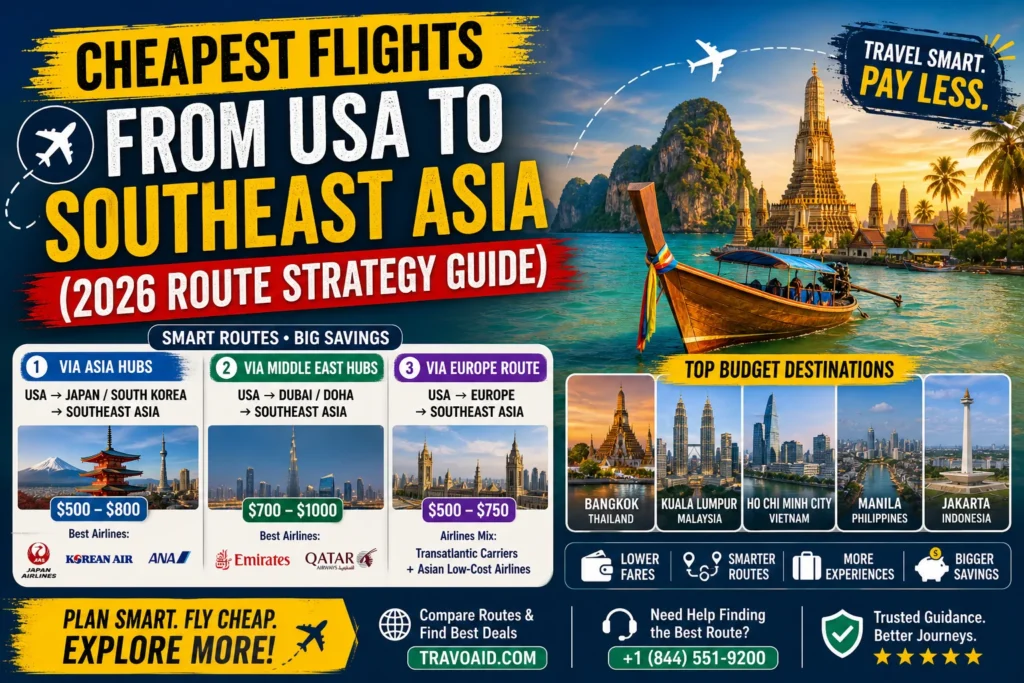
Cheapest Routes from USA to Southeast Asia
1. West Coast Routes The Cheapest Starting Point
Cities like Los Angeles, San Francisco, and Seattle consistently offer the lowest fares to Asia.
Route Strategy: USA → Japan / South Korea → Southeast Asia
Typical Cost: $500 – $800
Best Airlines:
- Japan Airlines
- Korean Air
- ANA (All Nippon Airways)
Why this route works:
- Heavy airline competition on trans-Pacific routes keeps prices competitive
- Japan and South Korea are major transit hubs with frequent connections
- Strong airline networks make onward flights to Southeast Asia cheaper
This is the most reliable and cost-effective route for most travelers
2. Middle East Hub Strategy Premium Routes at Lower Cost
This route is slightly longer but offers a balance of comfort and value.
Route Strategy: USA → Dubai / Doha → Southeast Asia
Typical Cost: $700 – $1000
Best Airlines:
- Emirates
- Qatar Airways
Why this route works:
- Middle Eastern airlines compete aggressively on long-haul pricing
- High-quality service often included (meals, baggage, comfort)
- Frequent global connections reduce pricing pressure
You may pay slightly more but get significantly better experience and value
3. Europe Route Strategy Maximum Savings (Advanced Hack)
This is one of the most underused strategies but often delivers the lowest prices.
Route Strategy: USA → Europe → Southeast Asia
Typical Cost: $500 – $750
Airline Mix:
- Transatlantic carriers (USA → Europe)
- Asian low-cost airlines (Europe → Southeast Asia)
Why this route works:
- Flights to Europe are often heavily discounted due to competition
- Low-cost carriers in Asia reduce onward travel costs
- You can mix airlines to build a cheaper overall journey
This route requires more planning but can deliver the biggest savings
✅ Read also : Cheapest US Cities to Fly Out Of for International Travel (2026 Guide)
Cheapest Destinations in Southeast Asia
Choosing the right destination is not just about cost it’s also about timing. Visiting during the right season helps you avoid peak pricing, crowds, and bad weather. Here are 5 of the cheapest destinations + best time to visit each:
1. Bangkok, Thailand Cheapest & Most Connected Hub
Why it’s cheap:
- Major international hub
- High airline competition
- Strong connectivity across Asia
Best Time to Visit:
- November to February (cooler weather, peak season but worth it)
- May to October (cheapest, but rainy season)
Budget Tip: Travel in shoulder months (March or October) for lower prices + decent weather
2. Kuala Lumpur, Malaysia Budget-Friendly Transit Hub
Why it’s cheap:
- Lower flight prices vs Singapore
- Strong low-cost airline network
- Affordable hotels and transport
Best Time to Visit:
- May to July and December to February
- Avoid heavy rain months (September–November peak monsoon)
Budget Tip: Visit in June or January for best balance of price + weather
3. Ho Chi Minh City, Vietnam Lowest Daily Cost Destination
Why it’s cheap:
- Extremely low food and stay costs
- Growing airline competition
- Great value for longer stays
Best Time to Visit:
- December to April (dry season, best weather)
- May to November (rainy but cheapest)
Budget Tip: Travel in April or November for lower prices and manageable weather
4. Manila, Philippines Affordable Flight Entry Point
Why it’s cheap:
- Competitive US flight routes
- Strong demand keeps airline pricing competitive
- Access to multiple islands
Best Time to Visit:
- December to April (dry season, best for beaches)
- Avoid typhoon season (June–October)
Budget Tip: January–March = best mix of weather + stable pricing
5. Jakarta, Indonesia Low-Cost Mega City
Why it’s cheap:
- Lower tourist demand vs Bali
- Affordable flights via hubs
- Very low cost of living
Best Time to Visit:
- May to September (dry season, best weather)
- October to April (rainy, but cheaper)
Budget Tip:
Travel in May or September for best pricing + good weather
Cheapest destinations = major hubs + low daily costs
Best savings come from combining:
- Right destination
- Right season
Timing your trip correctly can reduce total cost by 20%–40%
How to Reduce Flight Costs
1. Use Split Ticket Strategy
Book:
- USA → Asia hub
- Asia hub → final destination
Often cheaper than one ticket
2. Choose Alternate Departure Cities
Fly from:
- Los Angeles
- San Francisco
- Seattle
These hubs have lower fares
3. Book in the Right Window
- 2–4 months before travel
4. Stay Flexible with Dates
- ±3 days can reduce cost significantly
5. Use Stopovers Smartly
- Explore another city without extra cost
FAQs
1. What is the cheapest country to fly to in Southeast Asia from the USA?
Thailand (especially Bangkok) is usually the cheapest entry point. It’s one of the busiest aviation hubs in Southeast Asia, with strong airline competition from Asia, the Middle East, and Europe. This keeps flight prices relatively lower compared to smaller destinations.
Once you land in Bangkok, you can easily travel to nearby countries like Vietnam, Cambodia, or Malaysia at very low cost.
Best strategy: Fly into Bangkok → explore the region using budget airlines
2. How much should I realistically expect to pay for flights from the USA to Southeast Asia?
Flight prices vary based on route strategy, timing, and flexibility:
- Standard booking (direct or simple route): $900 – $1500
- Smart routing (via Asia or Europe hubs): $500 – $800
- Deal fares or error fares: $400 – $600 (rare but possible)
The biggest factor is not the destination it’s how you structure your route.
Right strategy can reduce your cost by 30%–50%
3. When is the best time to book cheap flights to Southeast Asia?
The ideal booking window is:
- 2–4 months in advance for most travelers
- 4–6 months for peak travel seasons (December–January, summer)
Also consider:
- Midweek price checks (Tuesday–Thursday)
- Flexible dates (±3–5 days)
Timing + flexibility = maximum savings
4. Is it cheaper to book one ticket or split tickets?
In many cases, split-ticket booking is cheaper, especially for long-haul routes.
Example:
- USA → Tokyo (main long-haul flight)
- Tokyo → Bangkok (regional budget flight)
This often costs significantly less than booking a single ticket for the full journey.
However, allow buffer time between flights to avoid missed connections.
Split routes = lower cost, but require better planning
5. Which airlines offer the best value for Southeast Asia routes?
The best value comes from a mix of full-service and strategic carriers:
- Asia route leaders: Japan Airlines, ANA (All Nippon Airways), Korean Air
- Middle East value carriers: Emirates, Qatar Airways
- Budget combinations: European carriers + Asian low-cost airlines
Best approach: Compare routes + combine airlines instead of sticking to one, including options like Air Canada airline tickets
Flights to Southeast Asia don’t have to be expensive when using support like Delta Airlines customer care.
👉 You’re not paying for distance you’re paying for route choice
👉 The smarter your route, the lower your cost
👉 Find the cheapest routes for your dates now:
👉 Or get expert help planning your route 📞 +1 (844) 551-9200