
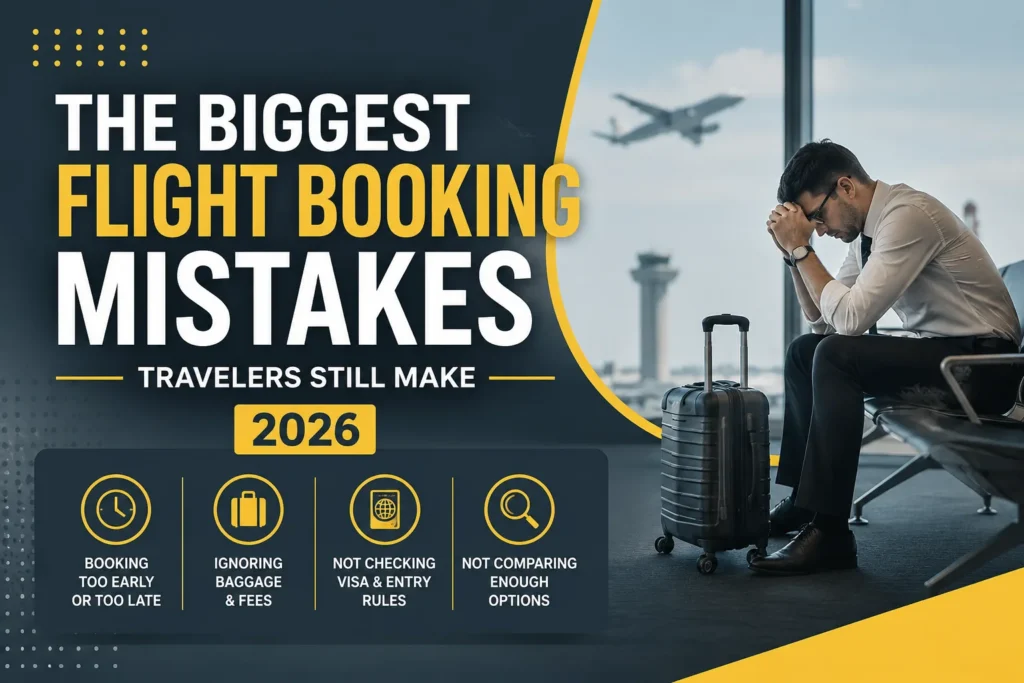
Travelers today have more tools, more apps, more comparison websites, and more airline choices than ever before.
And yet somehow, flight booking still feels stressful.
You search one route and see five different prices.
You refresh the page and the fare suddenly changes.
One airline looks cheaper until baggage fees appear later.
A “good deal” disappears within hours.
And after finally booking, many travelers still wonder:
“Did I actually make the right decision?”
Honestly, that uncertainty makes sense.
Modern airfare systems have become incredibly dynamic in 2026. Airlines constantly adjust pricing based on:
demand,
route competition,
traveler behavior,
seasonal trends,
remaining inventory,
airport congestion,
and booking timing.
That means booking flights today is no longer only about finding a cheap ticket.
It’s about understanding how airline pricing actually works.
And unfortunately, many travelers still make the same expensive mistakes repeatedly without even realizing it.
Some book emotionally too quickly.
Others wait too long hoping prices will collapse.
Many compare only the first airfare number while ignoring total travel cost completely.
And quietly, those mistakes add up.
This guide will break down:
- The biggest booking mistakes travelers still make in 2026
- Why airfare feels unpredictable now
- How smart travelers approach booking differently
- Why flexibility matters more than ever
- How airlines influence traveler behavior psychologically
- Smarter ways to reduce both stress and cost while booking flights
Whether you are planning domestic trips or international travel, understanding these mistakes can completely change the way you save money and experience travel.
👉 Compare smarter travel deals before airfare rises ✈️
👉 Need help finding better flight routes? 📞 +1 (844) 551-9200
Mistake #1: Booking Emotionally Instead of Strategically
One of the most common mistakes travelers still make is panic-booking.
The moment airfare starts rising slightly, fear immediately takes over.
Travelers assume:
“If I don’t book now, prices will only get worse.”
Sometimes prices do continue rising.
But not always.
Modern airline pricing systems constantly move both upward and downward depending on demand patterns and competitor behavior.
Yet many travelers still rush into air flight booking decisions emotionally without studying trends carefully first.
That urgency quietly causes travelers to overpay every day.
Smart travelers monitor pricing patiently before making decisions.
Mistake #2: Focusing Only on the Cheapest Fare
The lowest fare is not always the cheapest trip.
That’s one of the most expensive misunderstandings in modern travel.
A lower airfare may later include:
baggage fees,
seat selection charges,
airport transfer costs,
poor connection schedules,
or restrictive fare rules.
Many travelers complete airlines flight ticket booking decisions based only on the first number displayed during search results.
Later they discover the “cheap” ticket became much more expensive after all the hidden costs appeared.
The smartest travelers compare total trip value instead of airfare alone.
Mistake #3: Ignoring Flexible Dates
Flexibility remains one of the strongest ways to save money in 2026.
Even small date shifts can dramatically reduce airfare.
But many travelers still search only one exact departure day and one exact return day without exploring alternate options.
That habit limits pricing opportunities immediately.
Travelers comparing fly ticket price trends across several nearby dates often discover surprisingly large differences even within the same week.
Sometimes moving departure by just one day creates major savings.
Mistake #4: Booking Too Early or Too Late
Many travelers still believe:
“Earlier always means cheaper.”
That used to be more reliable years ago.
But modern airline systems now constantly adjust pricing based on real-time demand forecasting.
Booking too early can sometimes lock travelers into higher fares before airlines begin competing aggressively.
Booking too late often creates expensive urgency pricing.
That’s why smart travelers focus on booking windows instead of blindly booking immediately.
✅ Read also : Why Smart Travelers Book Flights Online Instead of at the Airport (2026).
The Biggest Mistake Travelers Still Make
One of the biggest mistakes travelers continue making in 2026 is comparing flights too narrowly instead of understanding the full travel experience they are actually purchasing.
Most travelers still focus heavily on airfare while ignoring the hidden costs that quietly appear later throughout the journey. At first glance, one airline may look dramatically cheaper than another, and naturally, travelers assume they already found the best deal possible. But modern travel rarely works that simply anymore.
A lower fare can often create far more stress later through long layovers, restrictive baggage rules, poor airport timing, uncomfortable schedules, inconvenient connections, or expensive add-on fees that were never obvious during the initial search process. What originally looked like a smart financial decision can slowly turn into a frustrating and exhausting travel experience once everything else begins adding up.
That’s where many travelers unknowingly lose both money and comfort.
Some travelers become so focused on saving a small amount upfront that they completely ignore how tiring the itinerary may actually feel later. Others rush through booking decisions emotionally because they fear airfare will suddenly rise if they wait even a little longer. Many people never compare nearby airports, flexible dates, alternate routing options, or overall schedule convenience before purchasing tickets.
And honestly, those rushed decisions often create the exact travel stress travelers were hoping to avoid in the first place.
The smartest travelers in 2026 approach flight booking very differently.
They no longer search only for the cheapest airfare available. Instead, they step back and evaluate the complete journey carefully from beginning to end. They think about total travel time, airport congestion, baggage flexibility, hotel timing, connection quality, overall comfort, reliability, and how smoothly the entire experience is likely to feel once the trip actually begins.
Because the cheapest ticket on paper does not always create the best overall trip.
Sometimes paying slightly more for a smoother itinerary, better departure timing, fewer connections, or a more reliable airline creates far greater long-term value emotionally, physically, and financially.
And honestly, travelers who focus on the full experience instead of just the airfare itself usually feel far more satisfied long after the trip is over.
Mistake #5: Not Comparing Nearby Airports
Many travelers search flights from only one airport.
That habit quietly increases airfare more often than people realize.
Nearby airports frequently offer:
better competition,
lower taxes,
different airline availability,
or cheaper international routing.
Smart travelers compare multiple departure options before booking.
Mistake #6: Ignoring Total Travel Timing
Travel timing affects more than airfare alone.
Poor flight schedules can create:
extra hotel nights,
expensive airport transfers,
exhaustion,
lost vacation time,
or stressful overnight layovers.
That’s why experienced travelers evaluate how the entire itinerary fits into the trip, not just the ticket price itself.
Airlines and Booking Behavior in 2026
Travelers comparing budget routes occasionally explore Spirit Airlines booking opportunities because ultra-low-cost carriers can create strong value on shorter routes when baggage needs remain minimal.
Some travelers use the United Airlines booking phone number while adjusting schedules, comparing alternate routes, or reviewing fare flexibility during changing travel periods.
Travelers managing complex itineraries often complete United Airlines ticket booking online because larger route networks provide greater schedule flexibility across domestic and international hubs.
International travelers comparing long-haul travel frequently review Air Canada airline tickets because Canadian hubs sometimes create smoother global routing opportunities depending on destination demand.
Others comparing international schedules occasionally evaluate Air Canada flight reservations while balancing airport congestion, connection timing, and overall travel comfort more strategically.
West Coast travelers planning regional or Pacific trips sometimes compare Alaska Airlines booking routes because regional competition can significantly affect airfare behavior.
And honestly, travelers who compare airlines carefully now often save far more money than those remaining loyal to only one carrier automatically.
Why Smart Travelers Monitor Fares Patiently
Experienced travelers rarely book immediately after the first search.
They monitor pricing trends.
They study route competition.
They compare nearby travel windows.
And they avoid emotional decisions driven by urgency.
Because airfare behaves more like a live market now than a fixed product.
Patience often creates better opportunities.
Hotels Matter Too
Many travelers forget that airfare affects hotel costs as well.
A poorly timed arrival may create:
extra hotel nights,
more transportation expenses,
or reduced vacation flexibility.
That’s why experienced travelers compare total trip value instead of airfare alone.
🏨 Book smarter, travel smoother, and make every hotel night count with Travoaid. ✈️
Real Travel Example
A traveler flying from Los Angeles to Rome may see:
cheapest route with long layovers: $710
slightly higher nonstop route: $920
At first glance, the cheaper route feels obvious.
But after comparing travel fatigue, overnight airport time, hotel timing, and total journey stress, many travelers later realize the nonstop route created much better overall value.
The smarter decision depends on the traveler’s priorities.
Final Thoughts
Flight booking in 2026 is no longer only about finding cheap airfare.
It’s about understanding how airline pricing, timing, flexibility, and traveler psychology all work together.
The smartest travelers today avoid expensive mistakes because they:
stay patient,
compare total trip value,
monitor trends carefully,
and avoid emotional booking decisions.
Because modern travel rewards strategy far more than urgency.
And honestly, travelers who understand that usually save both money and stress over time.
✅ Read also : On-Time Performance: April 2026’s Most Punctual Airlines.
FAQs
1. What is the biggest flight booking mistake travelers make in 2026?
The biggest mistake is focusing only on airfare without comparing the complete travel experience.
Many travelers ignore baggage fees, connection quality, airport timing, flexibility, and overall travel stress while searching for the cheapest fare possible.
The smartest travelers compare total value instead of ticket price alone.
2. Is booking flights early still the best strategy?
Not always.
Modern airline pricing constantly changes based on demand forecasting and competition. Booking too early can sometimes lock travelers into higher pricing before airlines begin competing more aggressively later.
The ideal booking window often matters more than simply booking first.
3. Why do flight prices constantly change now?
Airlines use dynamic pricing systems that adjust fares based on:
route demand,
remaining seats,
traveler behavior,
seasonal patterns,
and competitor pricing.
That’s why prices can change multiple times even within the same day.
4. Why do flexible dates help save money?
Airfare demand changes heavily depending on day of week, holidays, and travel patterns.
Even small date adjustments can create significantly lower pricing opportunities because airlines lower fares during weaker demand periods.
5. Are cheaper flights always worse?
Not necessarily.
Some cheaper routes create excellent value.
However, travelers should always compare baggage policies, layovers, airport timing, and total trip convenience before assuming the lowest fare creates the best overall experience.
6. Why do smart travelers monitor fares before booking?
Experienced travelers understand that airfare rarely moves in one predictable direction.
Monitoring trends helps travelers understand:
demand behavior,
seasonal pricing,
competition,
and better booking windows before committing.
That patience often creates stronger savings opportunities.
👉 Compare smarter airfare deals today ✈️ CLICK HERE
👉 Need help finding better travel routes? 📞 +1 (844) 551-9200