
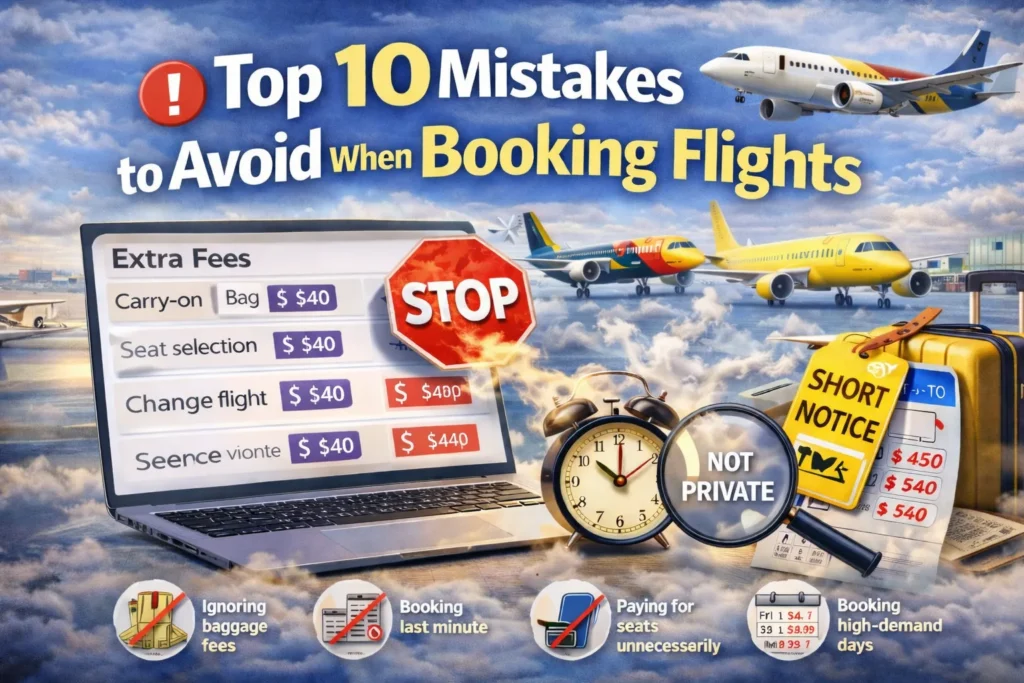
You search for a flight ticket, find a decent fare, and decide to wait hoping it might drop a little more. A day later, you check again, and the same ticket is now significantly higher. It feels random. It feels frustrating. And it happens more often than it should.
The truth is, flight pricing is not unpredictable it’s misunderstood. Airlines don’t randomly increase prices; they respond to demand, timing, seat availability, and user behavior. Small decisions made during the air ticket booking process when you search, how flexible you are, which airports you choose directly influence how much you end up paying.
Most travelers don’t realize this. They repeat the same habits every time they book, assuming they’re doing it right, while quietly paying more than necessary. This guide breaks down the top 10 air flight ticket booking mistakes in detail and explains how each one impacts your final ticket cost. More importantly, you’ll learn the exact mindset and strategies that help you avoid these errors and consistently book flights at better prices.
👉 Stop overpaying and start booking smarter today
📞 Call +1 (844) 551-9200 and get expert help instantly
1. Waiting Too Long to Book
This is the most common mistake and the one that quietly costs the most. I’ve done it myself. You find a flight at a decent price. It’s not the cheapest, but it feels reasonable. Instead of booking, you wait, thinking it might drop a little more. Then you check again… and the price has gone up.
That’s because flight pricing doesn’t work like typical sales. Airlines don’t lower prices closer to departure. They increase them as seats fill up. Every flight has limited seats, and those seats are sold in pricing tiers. Once the cheaper seats are booked, the system automatically moves to higher-priced ones. So when you wait, you’re not waiting for a deal you’re risking losing the cheaper option.
A typical scenario looks like this:
- Day 1: $140 → You wait
- Day 3: $165 → Still waiting
- Day 5: $210 → Now you feel pressure
- Day 7: $250 → You book, but overpay
Nothing about the flight changed only availability. This mistake happens because we assume prices will behave like discounts. We also fear missing a better deal. But in reality, waiting reduces your control and increases your cost.
Airlines That Help Reduce This Risk
- Southwest Airlines
- Delta Air Lines
How They Help
- More stable pricing compared to ultra-budget airlines
- Slower price increases as seats fill
- Easier to identify a “fair” price without panic
These airlines don’t eliminate price increases but they reduce extreme fluctuations.
What You Should Do Instead
- Set a target price range before searching
- Track fares for a short period (2–4 days)
- Book when the price is reasonable, not perfect
- Avoid waiting for further drops
The goal isn’t to catch the cheapest flight it’s to avoid missing a good one.
2. Booking Too Early Without Understanding Price Cycles
Air booking flight early feels like the safest move. You see a price, lock it in, and feel relieved that it’s done. No more checking, no more stress. But what most travelers don’t realize is booking too early can quietly cost you money. I’ve experienced this myself. I’ve booked flights months in advance thinking I got a good deal, only to check later and see the same flight cheaper. That’s when I understood one key thing:
Airline prices don’t stay fixed they evolve.
What Actually Happens Behind the Scenes
When airlines release tickets, they don’t know how demand will behave. So they often start with slightly higher prices to test the market.
As bookings come in, they adjust:
- If demand is slow → prices drop
- If demand is strong → prices increase
So when you book too early, you might be paying a “safe price,” not the best price.
Airlines That Help Reduce This Risk
- Southwest Airlines
- JetBlue Airways
How They Help
- Flexible change policies
- Easy rebooking if prices drop
- Travel credits instead of penalties
This means even if you book early, you’re not locked into a bad deal.
What You Should Do Instead
- Avoid booking immediately when tickets are first released
- Track prices for a few days or weeks
- Book within the optimal window (2–6 weeks for domestic flights)
- Choose airlines that allow flexibility
3. Ignoring Nearby Airports
This is one of the simplest mistakes but it quietly increases your cost every time. Most travelers search flights from just one airport the closest one. It feels convenient, familiar, and quick. I used to do the same without even thinking about alternatives. Until one day, I checked a nearby airport out of curiosity. Same destination. Same dates. Nearly $60 cheaper. That’s when it clicked I wasn’t paying for the flight, I was paying for convenience.
What’s Actually Happening Behind the Scenes
Airlines don’t price flights based only on distance, which is why comparing options like Alaska Airlines booking can help. Pricing varies by airport due to:
- Competition between airlines
- Passenger demand
- Airport operating costs
So two airports in the same city can have completely different fares for the exact same route.
Real Scenario
- Airport A → $220
- Airport B (45 mins away) → $160
Nothing changed except the airport.
Airlines That Help You Take Advantage of This
- United Airlines
- American Airlines
How They Help
- Operate across multiple airports in major cities
- Offer more route combinations
- Increase your chances of finding lower fares
These airlines give you flexibility to choose not just settle.
What You Should Do Instead
- Always check 2–3 nearby airports before booking
- Compare both departure and arrival options
- Factor in travel time vs cost savings
Even a slightly longer commute can result in significant savings.
4. Choosing Flights Based Only on Price
This is one of the most misleading mistakes and almost everyone falls for it at least once. You search for flights and instantly get drawn to the lowest number on the screen. It feels like a win. A $50 or $60 ticket looks like a great deal, and you rush to book it before it disappears. I used to do the exact same thing. But the problem starts after that.
What Actually Happens After You Click “Book”
That low price is just the base fare. Once you move forward, additional costs start appearing:
- Carry-on baggage
- Checked luggage
- Seat selection
- Priority boarding
Suddenly, your “cheap” flight doesn’t look cheap anymore.
Real Scenario
- Base Fare: $60
- Baggage: $35
- Seat: $20
- Fees: $15
👉 Final Cost: $130
Now compare that to a $110 ticket from another airline that includes everything.
Same route. Less stress. Lower total cost.
Why This Mistake Happens
We’re naturally attracted to the lowest visible price. Airlines especially budget carriers know this. They design pricing to look attractive upfront, even if the final cost is higher.
So instead of comparing value, we compare numbers.
Airlines That Help You Avoid This
- Southwest Airlines
- JetBlue Airways
How They Help
- More transparent pricing
- Fewer hidden charges
- Better inclusions in base fare
These airlines make it easier to understand what you’re actually paying for.
What You Should Do Instead
- Always check the total cost before booking
- Review what’s included in the fare
- Compare full price not just base fare
- Consider comfort and flexibility along with price
5. Not Being Flexible with Travel Dates
This is one of the most overlooked mistakes and it can quietly increase your flight cost without you even realizing it. Most travelers fix their travel dates first and then search for flights. It feels natural. You decide when you want to go, lock those dates, and expect to find the best deal within that window. I used to do the same. But the moment I started testing different dates, I noticed something surprising prices weren’t just changing, they were shifting dramatically.
What’s Actually Happening Behind the Scenes
Airlines price flights based on demand. And demand is heavily influenced by travel patterns:
- Fridays and Sundays → High demand (expensive)
- Mondays → Business travel (moderate-high)
- Tuesdays & Wednesdays → Lower demand (cheaper)
So when you fix your dates especially around weekends you’re often choosing the most expensive pricing window without realizing it.
Real Scenario
- Friday departure: $240
- Thursday departure: $170
- Wednesday departure: $150
Same route. Same airline. Just different demand levels.
Airlines That Help You Avoid This
- Delta Air Lines
- American Airlines
How They Help
- Multiple flights daily on popular routes
- Wider schedule options
- Better flexibility to choose cheaper time slots
More flights mean more chances to find lower fares within your travel window.
What You Should Do Instead
- Search using flexible date options
- Compare prices across 2–3 days before and after your preferred date
- Avoid peak travel days when possible
- Prioritize price windows over fixed schedules
Even shifting your trip by 12–24 hours can make a noticeable difference.
👉 Read also : Best Budget Weekend Trips from New York (2026) | Cheap Getaways from NYC
6. Booking Without Comparing Multiple Platforms
This is one of the easiest mistakes to make and one of the simplest to fix. Most travelers search on one website, see a price, and book it. It feels efficient. You’ve found a flight, it fits your timing, and you don’t want to overcomplicate things.
I used to do exactly that. But over time, I started noticing something frustrating the same flight was showing different prices on different platforms.
What’s Actually Happening Behind the Scenes
Not all platforms have access to the same inventory or pricing. Differences happen because of:
- Airline partnerships
- Platform commissions
- Exclusive deals or bundled fares
- Real-time availability updates
So when you rely on just one source, you’re only seeing part of the picture.
Real Scenario
- Platform A: $190
- Platform B: $165
- Airline website: $175
Same flight. Different pricing.
Airlines That Help You Avoid This
- Delta Air Lines
- United Airlines
How They Help
- Strong direct booking platforms
- Clear pricing with fewer hidden variations
- Better post-booking support compared to third-party sites
Booking directly with these airlines often reduces confusion and gives you more control over changes and cancellations, especially with Delta Airlines customer care.
What You Should Do Instead
- Compare prices across 2–3 platforms before booking, including options like Cathay Pacific booking
- Always check the airline’s official website
- Look at total cost, not just the listed fare
- Avoid rushing into the first deal you see
Spending an extra 5–10 minutes comparing can save you a meaningful amount.
7. Ignoring Midweek Price Movements
This is a mistake most travelers don’t even realize they’re making. You check a flight once maybe on the weekend see the price, and either book it or move on. But what you don’t see is how that same price might shift just a couple of days later.
I started noticing this pattern only after booking multiple flights. Prices that stayed steady over the weekend would suddenly drop slightly on Tuesday or Wednesday. Not always but often enough to matter.
What’s Actually Happening Behind the Scenes
Airlines constantly adjust prices based on demand data. And weekends are when most people search and book flights.
Once that surge passes, airlines reassess:
- If demand was lower than expected → prices may drop
- If seats are still unsold → discounts may appear
- If competition is high → fares adjust to stay competitive
This recalibration usually happens midweek.
Real Scenario
- Saturday: $200
- Sunday: $200
- Tuesday: $170
Same flight. Just updated pricing.
Airlines That Help You Take Advantage of This
- Spirit Airlines
- Frontier Airlines
How They Help
- Aggressive fare adjustments
- Frequent midweek discounts
- Better chances of catching lower prices
These airlines actively change pricing to fill seats, creating short windows of opportunity.
What You Should Do Instead
- Don’t book immediately after first search
- Recheck prices on Tuesday or Wednesday
- Track fares for a short period before deciding
- Combine this with flexible dates for better results
Even a small midweek drop can lead to noticeable savings.
8. Overlooking Hidden Fees
This is the mistake that makes most “cheap flights” expensive. You find a great deal, book quickly, and feel like you’ve saved money. But as you move through the checkout or worse, at the airport you start seeing extra charges.
And suddenly, that budget ticket doesn’t feel like a deal anymore. I’ve been there. Booked a low fare, only to pay more later for things I assumed were included.
What’s Actually Happening Behind the Scenes
Many airlines especially budget carriers separate their pricing into components. The base fare is kept low to attract attention, but essential services are added as extras.
Common hidden costs include:
- Carry-on baggage fees
- Checked luggage charges
- Seat selection costs
- Priority boarding
- Change or cancellation fees
Individually, they seem small. But combined, they can significantly increase your total cost.
Real Scenario
- Base Fare: $70
- Carry-on: $30
- Seat Selection: $20
- Fees: $15
👉 Final Cost: $135
Compare that to a $120 ticket from another airline that includes everything and the “cheap” option is no longer cheaper.
Airlines That Help You Avoid This
- Southwest Airlines
- JetBlue Airways
How They Help
- More transparent pricing
- Fewer add-on charges
- Better inclusions in base fare
These airlines make it easier to understand what you’re actually paying for.
What You Should Do Instead
- Always check what’s included before booking
- Calculate the final cost, not just the base fare
- Consider your travel needs (bags, seat, flexibility)
- Compare total value across airlines
A slightly higher ticket price can often be the smarter choice.
9. Not Paying Attention to Booking Timing Within the Day
Most people think flight prices change day by day. What many don’t realize is they can also change within the same day. I didn’t believe this at first either. But after tracking multiple flights, I noticed a pattern. The same flight would show one price in the morning, another in the evening, and sometimes even lower late at night. Not huge differences but enough to matter over time.
What’s Actually Happening Behind the Scenes
Airlines use dynamic pricing systems that constantly adjust fares based on:
- Real-time demand
- Number of searches and bookings
- Remaining seat inventory
- Competitor pricing updates
These updates can happen multiple times a day, which is why prices don’t stay fixed.
Real Scenario
- Morning search: $180
- Afternoon: $170
- Late night: $155
Same flight. Same day. Different pricing.
Airlines That Help You Take Advantage of This
- Frontier Airlines
- Spirit Airlines
How They Help
- Frequent fare updates
- Flash sales and short-term discounts
- More aggressive pricing changes throughout the day
These airlines create more opportunities if you check at the right time.
What You Should Do Instead
- Check prices at different times of the day
- Try searching late night or early morning
- Avoid booking immediately after your first search
- Combine timing with other strategies (flexible dates, comparison)
Even small price drops can add up across multiple trips.
10. Overthinking and Delaying the Booking Decision
This is the most human mistake and often the most expensive one. You find a flight that looks reasonable. Not the cheapest, but fair. Instead of booking, you start comparing, rechecking, waiting… trying to make sure it’s the absolute best deal. I used to do this every time. And more often than not, I’d come back to a higher price.
What’s Actually Happening Behind the Scenes
Flight prices don’t wait for your decision. While you’re comparing and thinking, other people are booking. As seats get filled, cheaper pricing tiers disappear and only higher fares remain.
So the longer you wait, the fewer good options you have.
Real Scenario
- You see a flight at $150 → feels okay, but you wait
- Next day: $180 → now you hesitate more
- Day after: $220 → you finally book, but overpay
Nothing changed except timing and availability.
Why This Mistake Happens
- Fear of missing a better deal
- Trying to find the “perfect” price
- Over-comparing too many options
But in flight booking, perfection is rare. Good deals are temporary.
Airlines That Help Reduce This Risk
- Southwest Airlines
- JetBlue Airways
How They Help
- Flexible booking policies
- Easy changes or credits
- Lower risk if prices drop later
These airlines reduce the pressure of making the “perfect” decision.
What You Should Do Instead
- Set a price threshold before searching
- Book when the fare meets your expectation
- Avoid endless comparison loops
- Trust a good deal when you see one
The goal is not to get the lowest price it’s to avoid missing a good one.
👉 Read also : Last-Minute Flights USA: How to Find Deals Under $100 (2026 Guide)
FAQs
1. What is the most common mistake when booking flights?
The most common mistake is waiting too long to book, assuming prices will drop. In reality, as the departure date gets closer and seats start filling up, airlines usually increase prices. This reduces your chances of finding affordable fares and often forces you to book at a higher cost. Booking within the right time window is key to avoiding this.
2. Is it better to book early or late?
Neither booking too early nor too late works consistently. Booking too early may mean paying higher initial prices, while booking too late often leads to expensive last-minute fares. The best approach is to monitor prices and book within the optimal window typically a few weeks before travel for domestic flights when prices are more balanced.
3. Do flight prices really change frequently?
Yes, flight prices can change multiple times a day. Airlines use dynamic pricing systems that adjust fares based on real-time demand, seat availability, booking patterns, and competitor pricing. This is why the same flight can show different prices even within a few hours.
4. Are budget airlines always cheaper?
Not always. While budget airlines offer lower base fares, they often charge extra for services like baggage, seat selection, and changes. Once these additional costs are included, the total price can sometimes be higher than a full-service airline that includes more in the ticket.
5. How can I consistently find cheaper flights?
To consistently find cheaper flights, focus on a combination of strategies: stay flexible with travel dates, compare multiple platforms, track prices over a short period, and consider nearby airports. Most importantly, book when the price fits your budget instead of waiting for the perfect deal, as delays often lead to higher costs.
Flight booking is not about luck it’s about awareness and timing. Every mistake you avoid gives you an advantage. Every smart decision reduces your cost. Over time, these small improvements add up to significant savings. Once you understand how pricing works, you stop reacting to fares and start controlling them.
👉 Book your next flight the smart way and save more
📞 Call +1 (844) 551-9200 today