
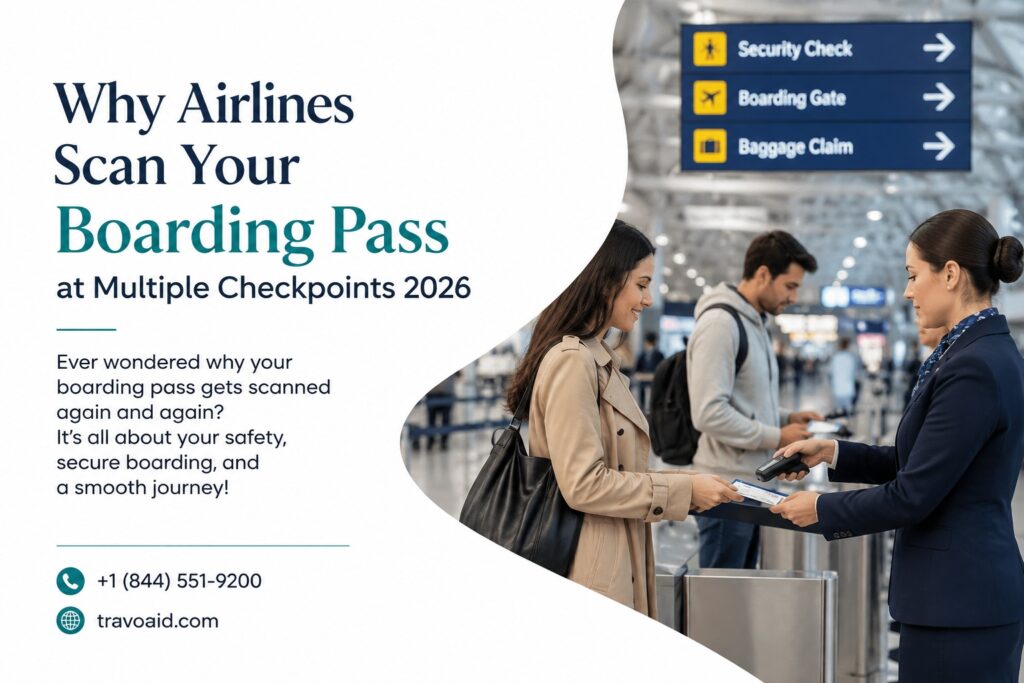
If you have flown anytime in the last year, you have probably noticed something. Your boarding pass gets scanned way more than once. At the entrance, at security, sometimes at the lounge, again at the gate, and once more right before you step onto the aircraft. It can feel repetitive, even annoying, especially when you are rushing to catch a connection.
But there is a real system behind all that scanning. It is not airline staff being overly cautious or airports trying to slow you down on purpose. Every scan is doing a specific job, and once you understand what that job is, the whole process starts to make a lot more sense.
In this guide, we will walk through exactly why your boarding pass gets checked so many times, what airlines are actually looking for at each checkpoint, and how understanding this can make your next flight ticket booking a lot less stressful.
What Actually Happens When Your Boarding Pass Gets Scanned
That barcode or QR code on your boarding pass is not just a picture. It is a small data file. Every time it gets scanned, a system somewhere pulls up your name, your seat number, your flight status, your baggage record, and sometimes your security clearance status too.
The Barcode Carries More Than You Think
A single scan can confirm:
- That your ticket was actually issued and paid for
- That you passed through security and were cleared
- That your identity documents match your booking
- That you are boarding the correct flight, not a similarly numbered one
- That your seat has not already been claimed by someone else
This is why airlines don’t just check your pass once at the door. Each checkpoint is verifying a different piece of that puzzle.
Checkpoint 1: Airport Entry and Document Check
At many international airports, your pass gets scanned before you even reach the check-in counters. This first scan usually confirms that you have a valid, confirmed reservation for a flight departing that day. Airports use this data to manage crowd flow and terminal capacity, especially during peak travel seasons.
If your airlines flight ticket booking was made through a third-party site or a travel agent, this is often the first place any mismatch in details gets caught, well before it becomes a bigger problem at the gate.
Checkpoint 2: Security Screening
This is the scan most travelers are familiar with. At the security line, your boarding pass is checked against your government ID or passport. The system confirms that the person standing in line is actually the person named on the ticket.
This step exists mainly to prevent ticket sharing or fraudulent travel documents. It also flags passengers who may need additional screening based on watchlists or random selection protocols set by aviation authorities.
Checkpoint 3: Lounge and Priority Access
If you have lounge access through a credit card, loyalty program, or premium cabin ticket, your boarding pass gets scanned again here. This confirms your eligibility in real time, since lounge access can change based on ticket class, membership tier, or even last-minute upgrades.
Airlines track this data closely because lounge capacity is limited, and letting in someone without proper access can create overcrowding for members who paid for that privilege.
Checkpoint 4: The Boarding Gate
This is the big one everyone recognizes. At the gate, your pass is scanned to confirm:
- You are boarding the right flight
- Your seat assignment is still valid
- You have not already boarded (this catches duplicate passes)
- Your boarding group matches the current call
Gate agents rely on this scan to build an accurate headcount before the doors close. If the number of scanned passengers does not match the manifest, the flight simply cannot depart. Safety regulations require it.
Checkpoint 5: Random Recheck at the Aircraft Door
Some airlines, particularly on international routes, do one final scan right at the aircraft door. This last check is mostly a safety net. It catches rare cases where someone slipped through the gate scan incorrectly, or where a last-minute seat change needs to be verified before takeoff.
It is quick, usually just a glance and a beep, but it closes the loop on the entire boarding process.
Why So Many Scans? The Real Reason Behind Airline Security
Put simply, airlines are managing three things at once: safety, fraud prevention, and operational accuracy. A single scan cannot do all three. Splitting the checks across multiple points means errors get caught early, long before a plane is fully boarded and ready to push back from the gate.
Aviation authorities have pushed airlines toward this layered system for years, and by 2026 it has become standard practice across most major carriers and international hubs. It is less about distrust and more about closing gaps that used to cause boarding delays, overbooking confusion, and security risks.
How This Impacts Your Flight Ticket Booking Experience
Understanding this system changes how you should approach your own travel planning. A few things worth keeping in mind:
- Book directly through the airline or a trusted platform, since mismatched details between your ticket and ID are the most common cause of delays at checkpoints
- Double check your name matches your passport exactly during aircraft ticket booking, since even a missing middle initial can trigger extra questioning
- Arrive earlier than you think you need to, since multiple scan points naturally add time to the boarding process
- Keep your boarding pass accessible, whether digital or printed, since fumbling for it slows down the line for everyone behind you
- Save your boarding pass in your phone’s wallet app as a backup in case of poor signal or app issues at the gate
Tips to Make Airlines Flight Ticket Booking Smooth Every Time
A little preparation goes a long way here. Some practical habits that genuinely help:
- Check in online 24 to 48 hours before departure so your details are locked in early
- Screenshot your boarding pass in case your airline’s app crashes at a busy checkpoint
- Confirm your seat and gate number the morning of your flight, since gate changes happen more often than people expect
- Travel with your ID or passport in an easily reachable pocket, not buried in your carry-on
- If you booked through a travel search engine, cross check the flight number directly with the airline’s site before you leave for the airport
Aircraft Ticket Booking and the Shift Toward Biometric Boarding
One trend worth watching in 2026 is how many airports are quietly replacing manual boarding pass scans with facial recognition. Instead of scanning a barcode at every point, some terminals now let passengers walk through checkpoints after a single face scan at bag drop.
This does not eliminate the underlying checks we covered above. It just moves them behind the scenes. Your identity, seat, and security clearance are still being verified at each stage, just faster and with less friction for the traveler. If your aircraft ticket booking includes a biometric enabled airport, you may notice far fewer physical scans on your next trip.
Finding Cheap United Flights Without Getting Stuck at Checkpoints
None of this needs to slow down your travel plans, especially if you are hunting for cheap united flights or budget fares on other carriers. The trick is pairing a good fare search with smart timing at the airport.
Best Time to Book
Fares tend to drop for domestic routes about six to eight weeks before departure, and earlier for international trips. Setting a price alert on a comparison platform like travoaid.com is one of the easiest ways to catch a good deal before it disappears.
Common Mistakes to Avoid
- Booking a tight connection without checking how many checkpoints the layover airport requires
- Ignoring seat selection, which can lead to gate agents reassigning you last minute
- Ignoring the airline’s stated minimum connection time, especially on international transfers
- Forgetting that some low-cost carriers charge extra for printed boarding passes, so always check in digitally
If you are still comparing options manually, a quick search for air tik prices across a few airlines usually turns up better fares than sticking with just one carrier’s website.
Frequently Asked Questions
Why does my boarding pass get scanned even after I already went through security?
Each scan checks something different. Security confirms your identity, the gate confirms your seat and flight, and the door confirms the final headcount. They are not redundant, they are layered checks.
Can I board with just a digital boarding pass?
Yes, most airlines accept mobile boarding passes at every checkpoint now. Just make sure your phone has enough battery and your screen brightness is high enough for the scanner to read it.
What happens if my boarding pass fails to scan?
Gate staff will manually verify your details against your ID and the flight manifest. It takes a bit longer, but it is a normal backup process and nothing to worry about.
Does biometric boarding replace boarding pass scans completely?
Not yet. Most airports still keep a boarding pass as a backup option alongside facial recognition, since not every traveler opts into biometric programs.
Need help finding the best airfare ? CLICK HERE
For More Information : 📞 +1 (844) 551-9200
Final Thoughts
The next time your boarding pass gets scanned for the fourth time in one trip, it is worth remembering that every beep is doing real work behind the scenes. From confirming your flight ticket booking to keeping the aircraft’s headcount accurate, these checkpoints exist to get you to your destination safely and on time.
If you are planning your next trip, compare fares and set alerts on travoaid.com before you book. A little research now can save you both money and stress at the airport later.
Related reads on travoaid.com:
- How to Enter Your Name Correctly When Booking a Flight
- What Really Happens If You Forget to Enable Airplane Mode?
Helpful external resources: